
What Is a Face Plunge? A Practical Beginner’s Guide
A face plunge is brief facial immersion in cool or cold water. People use it as a refreshing ritual, for temporary cooling and puffiness relief, or because cold facial stimulation can engage the human diving reflex.
How it works
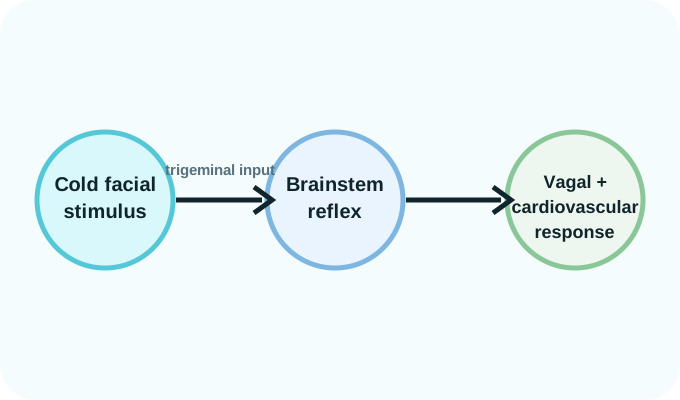
The face contains cold-sensitive trigeminal pathways. Cold facial stimulation can contribute to a reflex cardiovascular response involving the brainstem and vagal activity. The strength of the response varies with factors including temperature, breath holding and individual physiology.
What you need
At minimum: a clean bowl, clean water, and a way to cool it. A purpose-built bowl is optional. Start simple before deciding whether specialized gear improves your routine.
Basic method
- Use clean, comfortably cold water rather than chasing extreme temperatures.
- Place the bowl on a stable, non-slip surface.
- Keep the first immersions brief.
- Come up immediately if you feel dizzy, painful numbness, chest discomfort or otherwise unwell.
- Dry your face gently and continue your normal skincare routine if desired.
Who should be cautious
Cold exposure and breath-holding affect cardiovascular physiology. People with heart rhythm problems, fainting history, significant cardiovascular disease, or other relevant medical conditions should ask a clinician before deliberately using strong cold-face stimuli. Never use a face plunge as a substitute for medical treatment.
Tools: regular bowl vs dedicated bowl
A normal bowl is enough to learn whether you like the practice. A dedicated product can reduce friction through better geometry, ice separation or portability. See our face plunge bowl guide before spending.
Sources & methodology
- Khurana et al., Annals of Neurology (1980) — cold-face test and trigeminal–brainstem–vagal function.
- Hayashi et al. (1997) — face immersion and heart-rate variability/vagal activity.