
The Diving Reflex: What Cold Water on the Face Actually Does
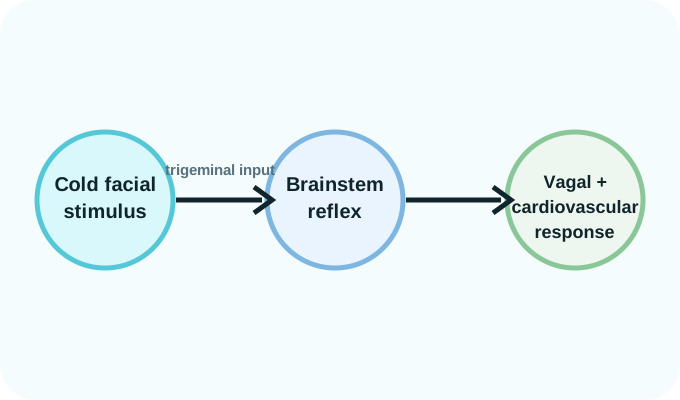
The human diving response is real. Cold facial stimulation can activate trigeminal sensory pathways and influence brainstem autonomic output, including increased cardiovagal activity and a slower heart rate in many experimental settings.
The pathway
Cold-sensitive facial afferents travel through branches of the trigeminal nerve. Brainstem integration can increase parasympathetic cardiac activity through vagal pathways while also engaging sympathetic vasoconstrictor responses.
Why breath holding matters
Face immersion and breath holding can reinforce components of the diving response. That is one reason home “face plunge” routines should not become breath-holding competitions.
What it does not prove
A measurable autonomic reflex does not automatically establish that a consumer bowl treats anxiety, improves long-term skin health, boosts immunity or creates lasting mood changes. Those are separate questions requiring separate evidence.
Safety context
Cold exposure can meaningfully alter cardiovascular physiology. People with heart rhythm disorders, fainting problems or significant cardiovascular conditions should seek individualized medical guidance before deliberately provoking strong cold-face responses.
Sources & methodology
- Khurana et al., Annals of Neurology (1980) — cold-face test and trigeminal–brainstem–vagal function.
- Hayashi et al. (1997) — face immersion and heart-rate variability/vagal activity.
- Methods of assessing vagus nerve activity and reflexes (review).